


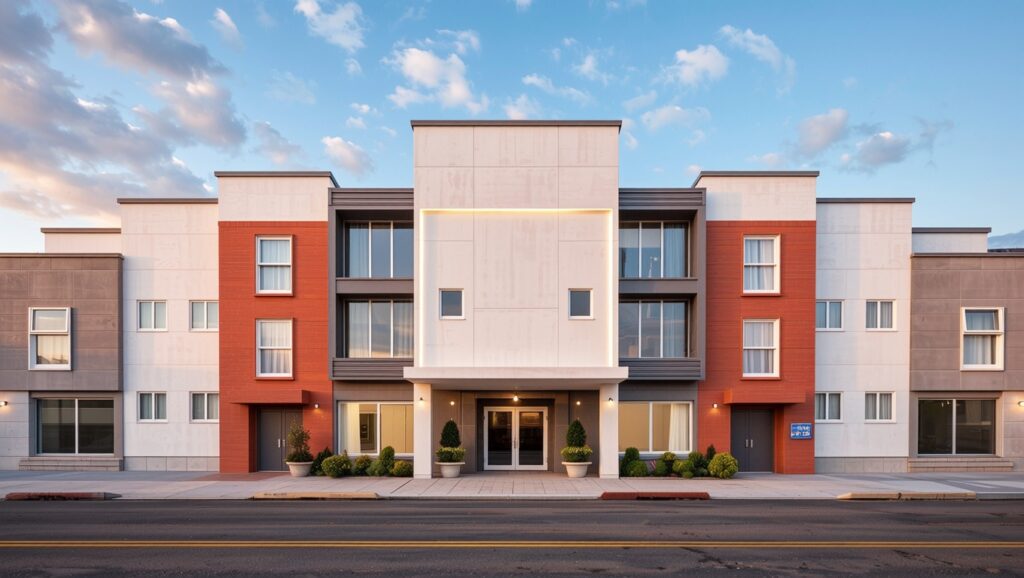
America’s housing crisis isn’t just hitting low-income families—it’s squeezing the middle class, too. Teachers, nurses, firefighters, and city employees—those who keep communities running—are being priced out of the very cities they serve. Workforce housing, designed to fill that gap, has become both a social priority and an investment opportunity.
But building, financing, and sustaining this asset class isn’t simple. Between zoning hurdles, rising construction costs, and limited funding models, the path to scalable workforce housing is full of obstacles. Let’s break down the most pressing challenges—and where real solutions might emerge.
1. Defining Workforce Housing
Workforce housing generally serves households earning 60–120% of the Area Median Income (AMI). It’s targeted toward essential workers who make too much to qualify for subsidized housing but too little to afford market-rate rent.
For example, in Fort Lauderdale, a household earning around $75,000–$100,000 may qualify for workforce housing. These are the people running hospitals, schools, and public services—yet they often can’t find affordable housing near their jobs.
This “missing middle” is where the tension lies: strong demand, weak supply, and little public policy designed for this segment.
2. Challenge #1: High Land and Construction Costs
The first—and most obvious—barrier is economics.
Rising Material and Labor Costs
Building costs have soared in the past decade. According to the National Association of Home Builders, construction costs increased over 35% between 2020 and 2024, driven by supply chain issues and labor shortages.
Developers focused on affordable rents face a math problem: if rents can’t rise high enough to cover these costs, projects simply don’t pencil out.
Land Scarcity in Urban Cores
Prime land in cities like Miami, Austin, or Phoenix is dominated by luxury or commercial developers who can outbid workforce housing projects. Even when land is available, zoning often restricts density, forcing developers to build fewer units—further straining returns.
“You can’t deliver affordable rents on luxury land prices,” notes a CBRE workforce housing report.
3. Challenge #2: Zoning and Regulatory Barriers
Zoning codes are among the biggest silent killers of workforce housing.
- Density limits prevent efficient multifamily construction.
- Parking requirements inflate costs by tens of thousands per unit.
- Lengthy permitting timelines delay projects, increasing holding costs.
Local Case Example
In South Florida, many suburban municipalities still classify multifamily developments as “conditional uses,” meaning they require public hearings and political approval—often derailed by NIMBY opposition.
Reform is slowly coming. Cities like Austin and Denver are piloting zoning overlays and reduced parking minimums to make workforce projects viable—but nationally, red tape remains a bottleneck.
4. Challenge #3: Limited Access to Financing
While luxury and affordable housing each have well-defined capital structures, workforce housing often falls into a “funding void.”
Why It’s Hard to Finance
- No direct subsidies: Workforce housing doesn’t qualify for Low-Income Housing Tax Credits (LIHTC).
- Institutional investors see moderate returns as too low.
- Traditional lenders require market-rate rents to justify underwriting.
Innovative Funding Approaches Emerging
- Public-private partnerships (P3s) that blend municipal land with private equity.
- Workforce housing bonds (e.g., Miami-Dade’s 2024 pilot program).
- Employer-sponsored housing by hospitals and school districts.
Yet these models are still early-stage, fragmented, and often dependent on local politics.
5. Challenge #4: Balancing Returns with Affordability
Investors and developers face a tightrope: make a project pencil for returns without pricing out the workforce it’s meant to serve.
Typical cap rates for workforce housing in 2025 range from 5.5–7%, versus 4–5% for Class A luxury multifamily. That margin helps, but rent ceilings constrain growth.
Some funds, like ThriveGate Capital, address this by focusing on secondary and tertiary markets where land is cheaper and population growth is strong—think Columbus, Indianapolis, or Birmingham. These markets deliver strong rent-to-income ratios and value-add upside without relying on government incentives.
6. Challenge #5: Aging Building Stock and Deferred Maintenance
Much of America’s “naturally occurring affordable housing” (NOAH) stock was built between 1970 and 1990.
These Class B and C properties now require:
- Roof replacements
- Energy retrofits
- Code upgrades
Renovations add capital expenditure (CapEx) pressure. The balance between upgrading safely and maintaining affordability is fragile—raise rents too much, and the property no longer serves its mission.
7. Challenge #6: Insurance and Operating Cost Inflation
The insurance crisis is especially acute in coastal and high-risk states. In Florida, premiums have surged 40–60% year over year for multifamily owners. Combined with property taxes and utilities, operating expenses eat deeper into NOI.
For every $1 increase in rent, many owners see $0.60–$0.70 absorbed by rising operating costs.
This discourages new construction and compresses returns on stabilized assets.
8. Challenge #7: Political Resistance and NIMBYism
Even when the numbers work, community pushback often derails projects.
Common objections include:
- “It’ll increase traffic.”
- “It’ll hurt property values.”
- “We don’t want apartments here.”
Ironically, workforce housing tenants—teachers, police officers, nurses—are often the same people communities depend on. Yet myths persist.
Public education and storytelling are key. Cities like Denver and Charlotte have used social campaigns highlighting “housing for our heroes” to build public support.
9. Challenge #8: Policy Fragmentation
No single federal framework governs workforce housing. Each state and municipality defines income bands differently, leading to confusion and uneven execution.
Some states offer density bonuses or property tax abatements for developers. Others provide soft loans through housing trusts. But without standardized programs, scaling remains complex.
10. Challenge #9: Long-Term Sustainability
Beyond construction, the question becomes: can workforce housing stay affordable over time?
Rents often rise faster than wages, especially in high-growth metros. Without regulatory mechanisms—like rent caps or long-term covenants—units can drift back to market rate, eroding impact.
Successful models blend mission-driven ownership, long-term hold funds, and transparent reinvestment strategies to maintain affordability across decades.
11. Overcoming the Challenges: Paths Forward
- Zoning reform: Simplify and incentivize moderate-density multifamily near job centers.
- Innovative financing: Expand workforce housing REITs and blended-rate capital stacks.
- Employer partnerships: Hospitals, school districts, and municipalities co-investing in staff housing.
- Data transparency: Standardized AMI metrics and rent tracking for workforce classifications.
The private sector can lead—but collaboration with cities and employers will define the next growth wave.
Conclusion
Workforce housing sits at the intersection of economic necessity and investment opportunity. The demand is undeniable, but execution requires navigating a maze of costs, codes, and capital constraints.
For investors, it’s not just about yield—it’s about impact with sustainability. The firms that succeed will be those who innovate financing, leverage overlooked markets, and balance profit with purpose.
ThriveGate Capital believes the future of real estate lies not in luxury, but in housing that builds thriving communities—where essential workers can live where they work, and investors can generate durable, meaningful returns.
FAQ
1. What defines workforce housing?
Housing for households earning 60–120% of the local median income—often essential workers who don’t qualify for subsidized housing.
2. Why is workforce housing so hard to finance?
It falls between affordable and market-rate tiers, so it lacks tax credits yet offers limited investor yield.
3. What are the biggest costs in developing workforce housing?
Land acquisition, construction materials, insurance, and compliance with local zoning laws.
4. Which cities are leading in workforce housing innovation?
Austin, Charlotte, and Miami have emerging workforce housing incentives and employer partnerships.
5. Is workforce housing a good investment?
Yes—when acquired with strong fundamentals and local demand, it offers stable returns, lower vacancy rates, and meaningful social impact.