


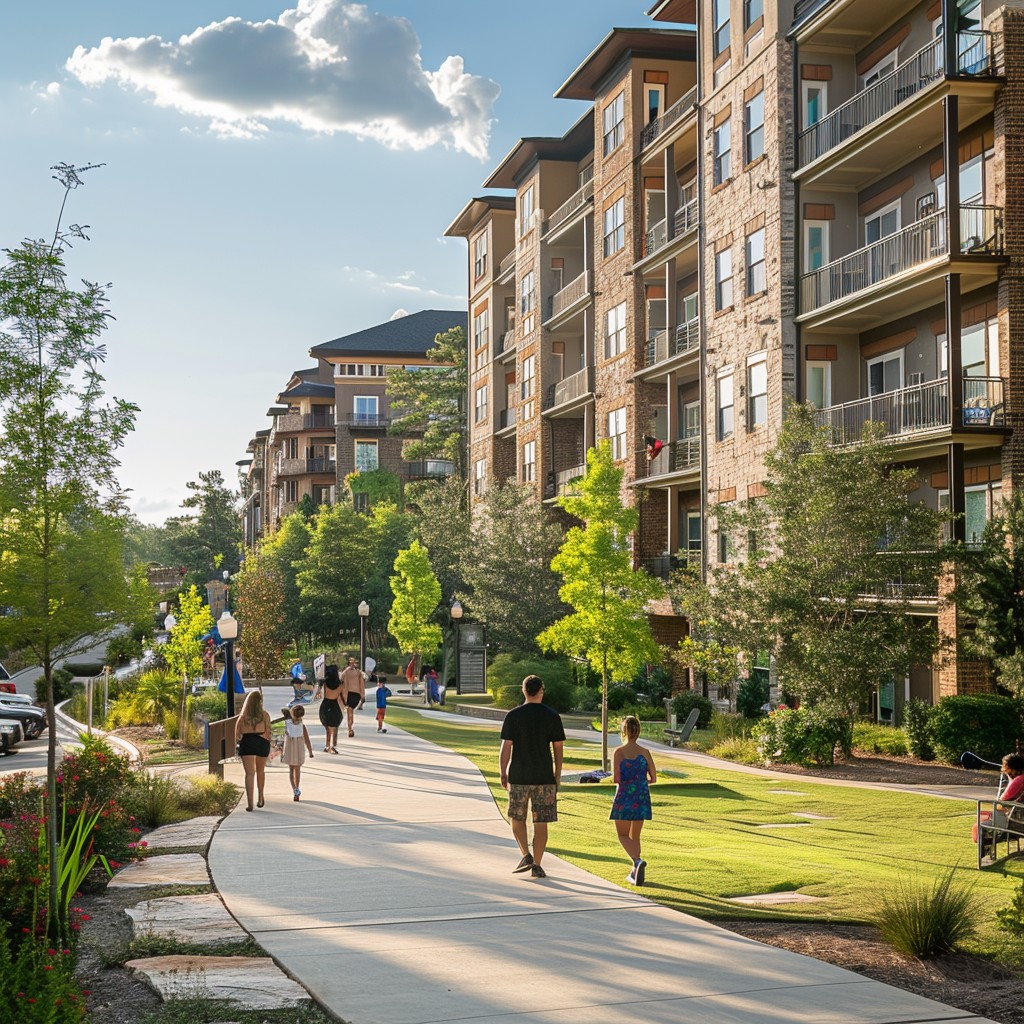
Workforce housing is no longer a niche strategy quietly sitting between luxury multifamily and subsidized affordable housing. It has become a structural allocation for sophisticated capital, driven by forces that are economic, demographic, and institutional rather than cyclical or speculative.
The mistake many investors make is assuming workforce housing behaves like a softer version of market-rate multifamily. It does not. The asset class is evolving in ways that materially change how risk, returns, and scale should be evaluated.
This article outlines the emerging workforce housing trends that actually matter to investors, not headlines or surface-level narratives, but the shifts shaping performance over the next cycle.
Workforce Housing Is Becoming a Capital Preservation Asset
One of the most important shifts is how workforce housing is being positioned inside portfolios. It is increasingly underwritten as a capital preservation and compounding strategy, not a growth trade.
Institutional and family office capital is reallocating away from strategies that rely on aggressive rent growth, cap rate compression, or refinancing timing. In that reallocation, workforce housing has emerged as a preferred destination because it offers income durability with fewer failure points.
The trend here is subtle but powerful. Workforce housing is moving from opportunistic buckets into core-plus and defensive sleeves. That changes how leverage is used, how exits are underwritten, and how long assets are held.
Rent Growth Expectations Are Resetting Permanently
Another critical trend is the normalization of modest rent growth assumptions.
In workforce housing, rent growth is increasingly underwritten at levels tied closely to local wage growth rather than historical multifamily averages. This is not conservatism for its own sake. It is recognition that affordability ceilings matter.
Investors who understand this shift are no longer chasing deals that only pencil if rents grow aggressively. Instead, they are prioritizing in-place cash flow, resident retention, and expense discipline.
This reset is healthy. It reduces dependency on macro tailwinds and forces strategies to stand on operational fundamentals.
Operating Efficiency Is Becoming the Primary Alpha
As rent growth assumptions compress, operational efficiency becomes the dominant source of outperformance.
Emerging workforce housing strategies focus heavily on:
Reducing resident turnover through service consistency
Lowering maintenance costs via preventative systems
Managing utilities and insurance with institutional discipline
Stabilizing bad debt through tighter screening and communication
This is not glamorous work, but it is where durable returns are now generated. The trend is clear: workforce housing rewards operators who treat property management as a core competency, not an outsourced afterthought.
Preservation Is Outpacing New Development by Design
Ground-up workforce housing development remains economically challenging in most markets. That reality has not changed.
What has changed is investor acceptance that preservation is the dominant workforce housing strategy, not a temporary substitute for development.
Capital is flowing toward acquiring existing Class B assets, reinvesting in them, and extending their useful life at rents below new construction. This trend is reinforced by rising replacement costs, zoning friction, and financing constraints.
As a result, existing workforce housing stock is becoming more valuable, not because it is perfect, but because it is difficult to replace.
Workforce Housing Is Absorbing Demand From Multiple Directions
Historically, workforce housing served a fairly narrow renter profile. That profile is broadening.
Today, workforce housing increasingly absorbs:
Households priced out of homeownership
Renters trading down from luxury units
Remote workers prioritizing affordability over amenities
Aging renters seeking stability over lifestyle branding
This multi-directional demand flow creates resilience. Workforce housing is no longer dependent on a single demographic or economic condition. It benefits when affordability tightens at both the low and high ends of the market.
This trend supports occupancy stability even when specific renter cohorts weaken.
Insurance and Property Taxes Are Forcing Geographic Selectivity
One of the least discussed but most impactful trends is how operating cost volatility is reshaping market selection.
Insurance and property taxes are no longer line items investors assume will normalize. In some markets, they are structural risks that materially affect NOI stability.
As a result, workforce housing investors are becoming far more selective at the submarket level. Markets with unpredictable tax regimes or insurance exposure are being discounted or avoided altogether, even if headline demand looks strong.
This trend favors disciplined regional strategies over broad national deployment.
Capital Structures Are Getting Simpler on Purpose
In prior cycles, complex capital stacks were tolerated in exchange for higher projected returns. That tolerance is fading.
Workforce housing investors are increasingly favoring simpler structures with:
Lower leverage
Longer fixed-rate debt
Fewer refinancing assumptions
Cleaner exit paths
This shift reflects a broader move toward risk-adjusted optimization rather than return maximization. Simpler capital stacks reduce tail risk and increase survivability across cycles.
The trend is not about fear. It is about experience.
After-Tax Returns Are Driving Allocation Decisions
Another emerging trend is the growing emphasis on after-tax performance.
Investors are paying closer attention to depreciation efficiency, tax deferral, and cash flow quality. Workforce housing performs well here because it combines steady income with strong depreciation characteristics.
As more capital evaluates returns on a net basis rather than headline IRR, workforce housing becomes more competitive relative to higher-growth but higher-tax strategies.
This is especially true for long-term capital with recurring income needs.
Workforce Housing Is Becoming an Institutional Brand, Not a Trade
The final trend is cultural, but no less important.
Workforce housing is no longer treated as a tactical allocation. It is becoming a strategic identity for certain funds and platforms. Investors want exposure to housing that is resilient, politically defensible, and economically grounded.
That shift changes how funds are raised, how assets are communicated, and how performance is benchmarked. Workforce housing is increasingly framed as a long-duration solution to structural affordability pressures, not a temporary arbitrage.
This narrative alignment matters when capital gets scarce.
Conclusion: The Winners Will Be the Least Exciting on Paper
The emerging workforce housing trends all point in the same direction. The asset class is maturing, professionalizing, and becoming more disciplined.
Returns will not come from aggressive growth assumptions or clever financial engineering. They will come from:
Stable demand
Operational excellence
Conservative capital structures
After-tax efficiency
And the simple fact that workforce housing is hard to replace
For investors who understand this, workforce housing offers something rare: the ability to compound capital quietly while others chase volatility.
In the next cycle, the most successful workforce housing investors will not be the loudest. They will be the ones who built strategies designed to survive.