


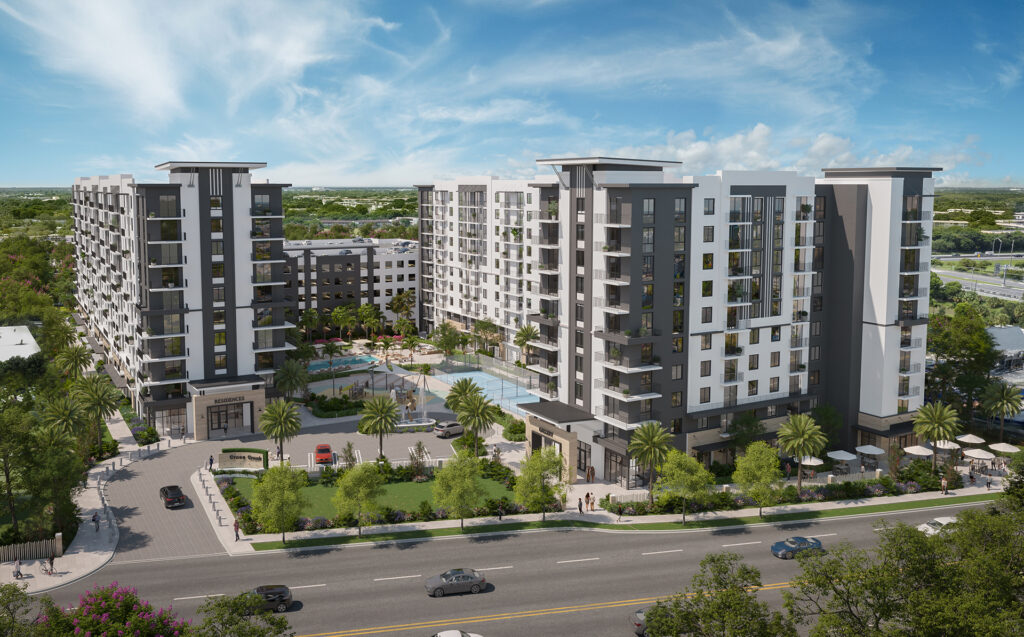
No real estate asset is completely immune to economic downturns. Rents can slow, expenses can rise, and capital markets can tighten. Yet among housing strategies, workforce housing consistently demonstrates a level of resilience that places it closer to “recession-resistant” than speculative.
To understand why, it’s important to look beyond marketing language and examine how workforce housing behaves when demand weakens, credit contracts, and household budgets are pressured. This article explains what workforce housing does well during recessions, where it remains exposed, and why investors increasingly treat it as a defensive allocation rather than a growth bet.
What “Recession-Proof” Really Means in Real Estate
In real estate, “recession-proof” does not mean prices never fall or rents never flatten. It means the asset continues to function as a business under stress. Occupancy remains relatively stable. Cash flow does not collapse. Forced sales are avoided. Recovery is faster than in more cyclical segments.
By that definition, workforce housing has historically performed better than most residential and commercial alternatives.
The Demand Engine: Essential Employment
Workforce housing serves households earning roughly 60%–120% of Area Median Income (AMI). These households are tied to essential jobs—healthcare, education, logistics, utilities, public services, and core service industries. These roles are less discretionary and less sensitive to economic contraction.
During recessions, layoffs disproportionately affect higher-paying, discretionary, or cyclical roles. Luxury renters feel the impact first. Many downshift to more affordable housing options rather than exit the rental market altogether. Workforce housing often absorbs this migration, maintaining demand even as premium segments weaken.
This dynamic creates a stabilizing demand floor that luxury apartments and speculative developments lack.
Occupancy Stability in Downturns
One of the clearest indicators of recession resilience is occupancy.
Workforce housing typically maintains high occupancy during downturns, even when rent growth stalls. Tenants prioritize staying housed over upgrading, and turnover declines as households seek stability. Lower turnover reduces leasing costs and revenue disruption, reinforcing net operating income.
By contrast, Class A multifamily often relies on concessions to maintain occupancy, and single-tenant assets experience sharper income swings when vacancies occur.
Rent Behavior Under Economic Stress
Workforce housing does not rely on aggressive rent growth to justify value. Rents are usually positioned below new-construction alternatives and often below replacement cost. This provides natural pricing support.
During recessions, rents may flatten or grow modestly, but sharp declines are less common than in higher-end segments. Affordability acts as a buffer. Tenants may cut discretionary spending before sacrificing housing that fits their budget.
This does not mean rent risk disappears. It means rent volatility is muted, which is often more important to long-term investors than peak pricing.
Inflation, Wages, and Affordability
Recessions do not always coincide with deflation. In some cycles, inflation persists even as growth slows. Workforce housing tends to perform well in these environments because it sits at the intersection of affordability and necessity.
Operating costs may rise, but the chronic undersupply of attainable housing limits competitive pressure. Replacement costs increase faster than existing rents, reducing new supply and supporting occupancy.
The key risk during inflationary recessions is expense management—not demand collapse. Operators who focus on efficiency and maintenance rather than repositioning tend to outperform.
Interest Rates and Capital Market Pressure
Most real estate downturns are amplified by capital markets. Rising rates, tighter credit, and refinancing risk often cause distress.
Workforce housing generally enters downturns with more conservative underwriting. Lower acquisition pricing, lower rents relative to income, and emphasis on cash flow rather than appreciation reduce sensitivity to exit cap rate expansion.
Additionally, rising mortgage rates often delay homeownership, pushing more households into rentals. This countercyclical effect can actually support workforce housing demand during rate-driven slowdowns.
Supply Risk: A Structural Advantage
Perhaps the strongest recession defense for workforce housing is undersupply.
Workforce housing is difficult to build profitably without subsidies due to land, construction, and regulatory costs. As a result, supply rarely overshoots demand, even late in cycles. Luxury multifamily, by contrast, often experiences supply gluts just as demand softens.
This structural supply constraint limits prolonged oversupply risk and supports faster recovery after downturns.
What Workforce Housing Is Not Immune To
Calling workforce housing recession-resistant does not mean it is risk-free.
Severe local employment shocks can still impact performance. Poorly maintained assets can suffer even in strong demand environments. Over-levered capital structures increase vulnerability regardless of asset class.
Workforce housing reduces macro risk, but it does not eliminate execution risk.
Why Investors View Workforce Housing as Defensive, Not Speculative
The appeal of workforce housing is not maximum upside. It is predictability.
Institutional and long-term investors value assets that continue producing income across cycles, avoid forced sales, and preserve capital during volatility. Workforce housing aligns with those objectives more consistently than luxury multifamily, development, or single-family rental portfolios concentrated in overheated markets.
This is why workforce housing is increasingly categorized as core or core-plus rather than opportunistic.
How Workforce Housing Recovers After Recessions
Recovery speed matters as much as downturn performance.
Because workforce housing rarely experiences deep vacancy or rent declines, recovery tends to be quicker and less capital-intensive. Assets do not require heavy concessions or repositioning to regain momentum. As employment stabilizes, modest rent growth resumes naturally.
This smoother recovery profile improves long-term compounding and reduces the drag of cycle timing.
The Bottom Line for Investors
Workforce housing is not recession-proof in the absolute sense. No real asset is.
But it is structurally resilient. Demand is necessity-driven. Supply is constrained. Income volatility is limited. Recovery is faster than in more speculative segments.
For investors seeking assets that prioritize capital preservation and income durability over headline returns, workforce housing behaves more like a shock absorber than a swing trade.
Conclusion: Recession-Resistant by Design
Workforce housing was not engineered to outperform in boom times. It was shaped by economic reality—by wage constraints, employment patterns, and housing scarcity. Those same forces give it durability when conditions deteriorate.
In an investment landscape defined by uncertainty, workforce housing offers something increasingly rare: stability that holds when markets don’t.