


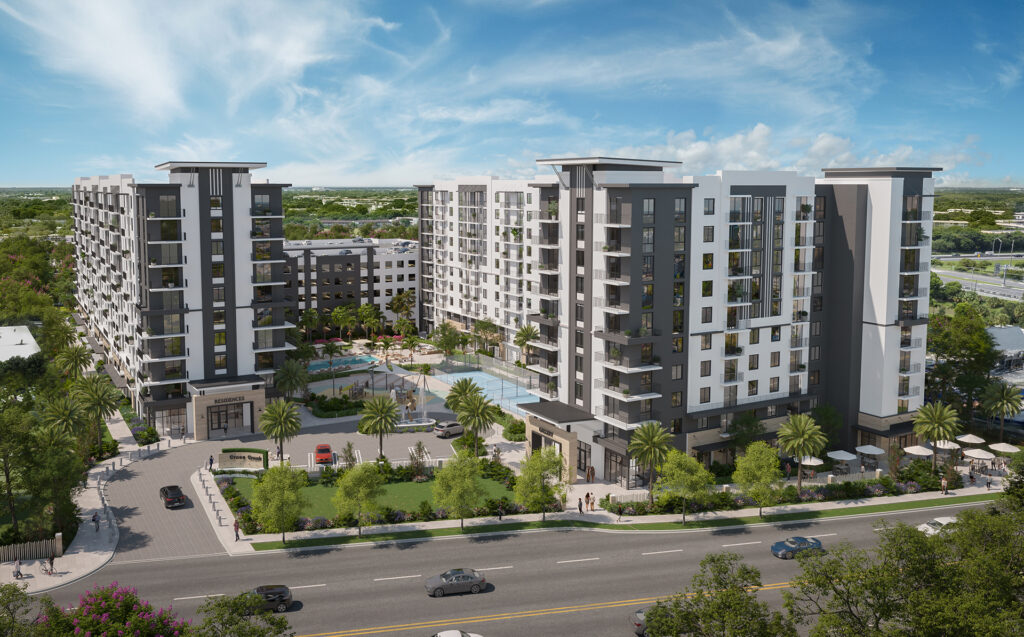
Understanding the Two Housing Models
In today’s housing market, the line between affordable housing and workforce housing is often blurred. Both aim to address the growing housing crisis and provide homes for individuals priced out of increasingly expensive urban areas — yet they serve different segments of the population, operate under distinct financial models, and are shaped by separate policy frameworks.
As cities like Fort Lauderdale, Miami, and Atlanta face surging housing costs and shrinking inventories, understanding these differences isn’t just academic — it’s essential for policymakers, investors, and communities alike.
1. Defining Workforce Housing vs. Affordable Housing
Affordable housing traditionally refers to housing that’s subsidized or supported by government programs to assist low-income households. It’s typically reserved for individuals earning below 80% of the area median income (AMI). Many affordable projects are funded through mechanisms like Low-Income Housing Tax Credits (LIHTC), Housing Choice Vouchers, or HUD-backed programs.
Workforce housing, on the other hand, targets middle-income earners — the essential workers who earn too much to qualify for traditional affordable housing but still struggle to afford market rents. These include teachers, nurses, police officers, and service workers who form the backbone of local economies.
Workforce housing typically serves those earning between 80% and 120% of AMI, though the definition can vary by city and state.
2. The Income Gap Both Programs Aim to Fill
The U.S. housing problem is no longer confined to the lowest income brackets. Middle-class renters and buyers now face the same affordability squeeze that low-income families have endured for decades.
- In many urban regions, rents have increased over 25% since 2020, while wage growth for middle-income earners has lagged behind at roughly 15%.
- In Fort Lauderdale, for example, a household earning the median income of $82,000 may still struggle to afford an average two-bedroom apartment renting for $2,900 per month.
This “missing middle” — people earning too much for subsidies but not enough for luxury rents — is where workforce housing steps in.
3. How Each Model Is Funded and Developed
The biggest distinction between affordable and workforce housing lies in how they are financed.
Affordable Housing
Affordable housing projects often rely heavily on public subsidies and tax incentives, such as:
- LIHTC (Low-Income Housing Tax Credit) programs
- Section 8 vouchers
- HOME Investment Partnerships Program
- Public housing authorities
These programs allow developers to offer below-market rents in exchange for adhering to long-term affordability restrictions.
Workforce Housing
Workforce housing, in contrast, operates primarily through private capital and innovative financing models. Developers and investors may use:
- Reduced land costs through public-private partnerships (PPPs)
- Tax abatements or density bonuses offered by local governments
- Mission-driven funds from impact investors or real estate firms
- Employer-assisted housing programs
Because workforce housing often lacks direct subsidies, developers must rely on creative financing and cost efficiency to maintain rents at attainable levels.
4. The Role of Policy and Regulation
Affordable housing is often subject to stringent income qualification requirements and rental caps enforced by government agencies. Tenants must meet income thresholds and comply with annual recertifications.
Workforce housing, however, operates in a more flexible space. While it may receive local incentives or zoning breaks, it’s not bound by the same federal oversight. This flexibility allows developers to move faster — but it also means less regulatory protection for tenants and less consistency in affordability standards.
5. Who They Serve: Demographic and Professional Differences
| Housing Type | Income Range (as % of AMI) | Typical Residents | Common Funding Sources |
|---|---|---|---|
| Affordable Housing | 30%–80% AMI | Low-income families, seniors, disabled individuals | LIHTC, Section 8, HUD programs |
| Workforce Housing | 80%–120% AMI | Teachers, nurses, first responders, service professionals | Private equity, employer programs, PPPs |
The key takeaway? Affordable housing is safety-net housing; workforce housing is sustainability housing.
6. Why the Distinction Matters
The distinction between the two is more than bureaucratic. It determines who gets access, how projects are funded, and what incentives developers can pursue.
Affordable housing alleviates poverty and prevents homelessness — workforce housing prevents economic displacement and community hollowing. Without both, cities risk losing their diversity and functional middle class.
As one Fort Lauderdale housing official noted in a 2025 planning report:
“If firefighters, teachers, and nurses can’t live in the communities they serve, those communities eventually collapse from within.”
7. The Growing Demand for Workforce Housing in 2025
Across the U.S., demand for workforce housing now exceeds 7 million units, according to NMHC estimates. This shortage is most acute in Florida, Texas, and California, where population growth has outpaced new supply.
In Fort Lauderdale specifically:
- Vacancy rates for Class B and C apartments are below 3%.
- Rent growth in suburban workforce zones has outperformed luxury segments for three consecutive years.
- Developers are responding with mixed-income and modular builds to control costs.
Investors are paying attention, too. Private equity funds specializing in attainable housing now account for over $30 billion in AUM nationwide, signaling a structural shift toward the “missing middle” segment.
8. Common Challenges Facing Both Models
Despite their differences, both workforce and affordable housing share overlapping challenges:
- Rising construction and insurance costs (especially in coastal states)
- Limited land availability near job centers
- Lengthy permitting and zoning processes
- Community opposition (NIMBYism)
- Financing gaps due to low returns vs. high risk
However, workforce housing faces a unique financial dilemma: it serves tenants who don’t qualify for subsidies yet still can’t pay market rates. That makes underwriting and long-term viability particularly tricky.
9. How Investors Are Approaching Each Sector
Affordable housing investors typically seek stable, low-volatility returns supported by federal guarantees or long-term leases. Many institutional investors — pension funds, insurance firms, and REITs — participate through social impact or ESG-mandated funds.
Workforce housing investors, however, focus on value-add and attainable strategies. They buy aging Class B/C assets, implement moderate upgrades, and maintain rents just below new-build market rates. The play is to achieve steady cash flow and social impact simultaneously.
10. Policy Innovations on the Horizon
Several 2025 policy trends are shaping both housing segments:
- Zoning reform: allowing higher density and ADUs near transit corridors.
- Tax incentives: new state-level credits for workforce housing developers.
- Employer-sponsored housing: major hospital systems and universities are beginning to co-invest in housing for staff.
- Streamlined permitting: fast-track lanes for mixed-income projects.
Florida’s Live Local Act has already become a national model, offering significant tax benefits and zoning preemptions to promote attainable housing development.
11. The Long-Term Outlook
The housing crisis is unlikely to resolve itself through one model alone. Affordable housing addresses the base of the pyramid — those with the most acute need. Workforce housing stabilizes the middle layer — the people who keep cities functional.
In 2025 and beyond, successful cities will embrace a continuum approach — blending both housing types into cohesive community plans. Expect to see:
- More public-private partnerships
- Greater employer participation
- Continued policy innovation
The ultimate goal: a balanced housing ecosystem where affordability isn’t defined by exclusion but by accessibility.
Key Takeaways
- Affordable housing serves low-income households (below 80% AMI) and relies on government subsidies.
- Workforce housing targets moderate-income earners (80–120% AMI) and is usually financed privately.
- Both face barriers from zoning, construction costs, and financing gaps.
- Cities that integrate both models into their planning will be best equipped to support economic stability and inclusive growth.