


Real estate investors often talk about “multifamily” or “rentals” as if all rental housing behaves the same. In reality, workforce housing, conventional multifamily, and single-family rentals are fundamentally different businesses, each with its own return profile, operational risk, and sensitivity to market cycles.
Choosing the right asset class is less about chasing the highest projected return and more about understanding how returns are generated, what can go wrong, and how capital behaves during stress. This article compares these three housing strategies through the lenses that matter most to investors: ROI drivers, risk exposure, operational complexity, and long-term resilience.
Defining the Three Asset Types
Workforce Housing
Workforce housing serves renters earning roughly 60%–120% of Area Median Income (AMI). These are essential workers—teachers, nurses, municipal employees, logistics staff—who earn too much to qualify for subsidized affordable housing but not enough to comfortably afford new luxury apartments.
From an investment standpoint, workforce housing is usually composed of Class B or well-maintained Class C multifamily properties located near employment centers. The strategy prioritizes affordability, stable occupancy, and modest rent growth rather than luxury upgrades.
Conventional Multifamily
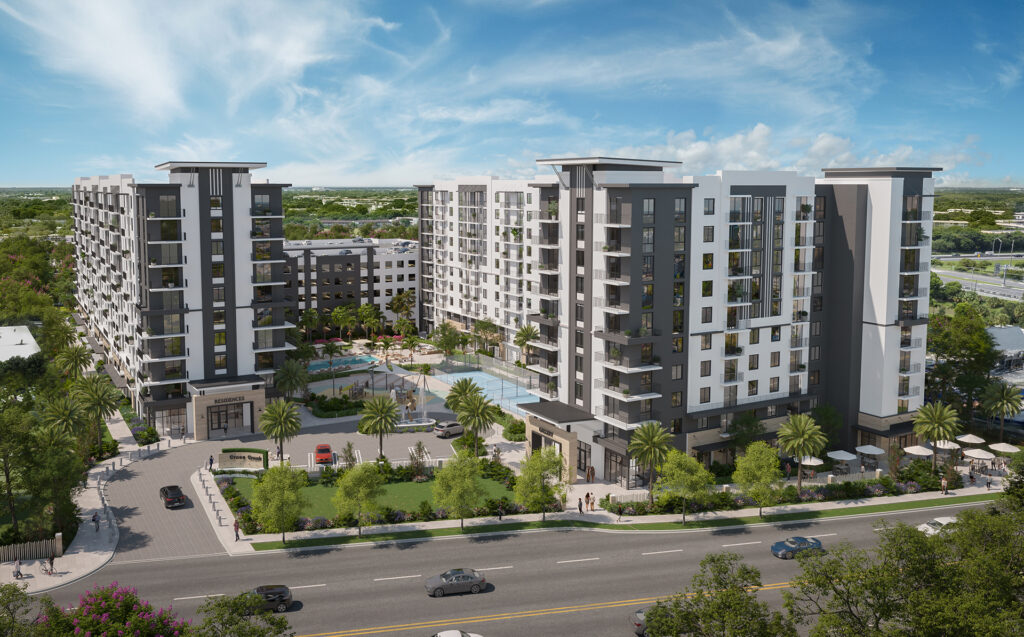
Conventional multifamily typically refers to market-rate apartment buildings that span Class A (luxury) and higher-end Class B assets. These properties often compete on amenities, finishes, and lifestyle positioning. Rent growth and tenant churn are more closely tied to economic conditions and wage growth at the higher end of the income spectrum.
Single-Family Rentals (SFR)
Single-family rentals involve owning detached homes leased to individual households. This asset class has grown rapidly due to institutional capital, demographic shifts, and home affordability challenges. Returns often rely on a combination of rental income and long-term appreciation.
How ROI Is Generated in Each Strategy
Workforce Housing ROI
Returns in workforce housing are driven primarily by income stability and operational efficiency. Occupancy tends to remain high across cycles because demand is anchored to essential employment rather than discretionary lifestyle choices. Rent growth is typically modest but durable.
Value creation often comes from professionalizing operations, improving property management, modest renovations, and reducing expenses rather than pushing rents aggressively. As a result, workforce housing tends to deliver lower volatility, more predictable cash flow, and strong risk-adjusted returns.
Multifamily ROI
Conventional multifamily ROI is more sensitive to rent growth assumptions. In strong economic environments, Class A and high-end Class B properties can generate outsized returns as rents rise quickly. However, this same reliance on rent growth introduces downside risk when demand softens.
Multifamily investors often target higher IRRs by assuming continued rent increases, amenity premiums, and favorable exit cap rates. When these assumptions hold, returns can be attractive. When they don’t, performance can deteriorate quickly.
Single-Family Rental ROI
Single-family rental returns are split between current income and appreciation. Cash flow can be thinner due to higher per-unit operating costs, but appreciation has historically been a major contributor to total returns.
Because each home is a standalone asset, portfolio performance can be uneven. Vacancy, maintenance, or capex at a single property has a disproportionate impact compared to multifamily assets with dozens or hundreds of units.
Risk Profiles Across the Three Asset Classes
Demand Risk
Workforce housing demand is tied to employment in essential sectors, which historically remain resilient even during economic downturns. When households downshift from luxury rentals, workforce housing often benefits.
Conventional multifamily faces greater demand risk during recessions, as renters seek lower-cost alternatives or consolidate households. Luxury assets are particularly vulnerable.
Single-family rentals depend heavily on local housing markets and employment conditions. While demand is generally strong, localized economic shocks can affect individual properties more acutely.
Income Volatility
Workforce housing exhibits low income volatility due to high occupancy and broad demand. Multifamily income can fluctuate more as vacancies rise or concessions increase during soft markets. Single-family rental income can be disrupted by single-tenant vacancy events, making cash flow less predictable.
Operational Risk
Operational complexity increases as assets become more dispersed. Workforce housing and multifamily benefit from centralized management and economies of scale. Single-family rentals face higher operational risk due to scattered-site maintenance, turnover costs, and inconsistent expense profiles.
Market Sensitivity
Multifamily and SFR strategies are more sensitive to interest rate changes and home price cycles. Workforce housing tends to be less sensitive because its value is driven more by income stability than speculative appreciation.
Capital Intensity and Scalability
Workforce housing and multifamily scale efficiently. A single acquisition can deploy significant capital and add dozens or hundreds of units to a portfolio. This scalability improves expense ratios and allows for professional management systems.
Single-family rentals require repeated acquisitions to scale, which increases transaction costs and management complexity. While institutional platforms have addressed some of these challenges, the model remains operationally heavier on a per-unit basis.
Liquidity and Exit Risk
All three strategies are relatively illiquid compared to public markets, but exit dynamics differ.
Workforce housing and multifamily assets benefit from deep buyer pools, including institutional investors, private equity funds, and REITs. Exit risk is primarily tied to market cycles and financing conditions.
Single-family rental portfolios can be harder to exit as a package, often requiring either bulk sales at discounts or piecemeal disposition, which extends timelines and increases transaction costs.
Risk-Adjusted Returns: The Real Comparison
Headline IRRs can be misleading. A strategy that targets higher returns but carries greater volatility may underperform on a risk-adjusted basis.
Workforce housing often delivers lower peak returns but higher certainty. Multifamily can deliver strong upside in favorable conditions but carries more downside exposure. Single-family rentals can produce solid long-term wealth through appreciation but introduce operational and concentration risk.
For many investors, especially those focused on capital preservation and consistent income, workforce housing compares favorably on a risk-adjusted return basis.
Which Strategy Fits Which Investor?
Workforce housing appeals to investors who value durability, income stability, and downside protection. It works well as a core holding in long-term portfolios.
Conventional multifamily fits investors comfortable with cyclical risk and rent-growth dependency, often those seeking higher upside during expansionary periods.
Single-family rentals suit investors who believe strongly in long-term home price appreciation and are willing to manage operational complexity.
Sophisticated portfolios often include more than one of these strategies, but weighting matters.
Conclusion: ROI Is Only Half the Equation
When comparing workforce housing, multifamily, and single-family rentals, ROI alone is not enough. The real differentiator is how those returns are generated and how they behave under stress.
Workforce housing stands out for its stability and resilience. Multifamily offers upside with volatility. Single-family rentals provide appreciation potential with operational trade-offs.
Investors who understand these differences can allocate capital intentionally rather than reactively—and build portfolios designed to last across cycles.